


Views: 0 Author: Site Editor Publish Time: 2026-03-23 Origin: Site


A pressing line can look perfectly fine on the surface, yet still produce inconsistent finishing results. Operators may adjust steam, pressure, or temperature again and again, but the outcome does not improve. In many cases, the overlooked factor is the layer beneath the cover. The choice of padding material is not a minor detail—it directly determines how heat, steam, and pressure interact with each garment. That is why silicone sponge has become the preferred solution for ironing tables that demand consistent, repeatable results. At iFeltek, we focus on developing materials that support real production performance, helping ironing tables deliver stable, repeatable outcomes rather than unpredictable ones.
In garment pressing, the padding layer is not simply there to cushion the fabric. It acts as a functional support that shapes how pressure is distributed across the ironing surface. When garments are exposed to heat and steam, uneven pressure can easily lead to wrinkles, marks, or inconsistent finishing.
Silicone sponge provides a stable yet flexible support structure. Instead of collapsing under pressure, it maintains a balanced surface that allows the garment to remain evenly supported. This helps ensure that pressing force is distributed more uniformly, especially when dealing with varying fabric thicknesses or layered garments.
Many buyers initially focus on the ironing machine itself, assuming that performance is determined entirely by heating elements or steam systems. However, the layer beneath the cover plays a critical role in how steam passes through and how the fabric reacts during pressing.
A well-designed silicone sponge layer allows steam to penetrate and escape more efficiently. It also helps maintain surface consistency, preventing localized pressure points. Over time, this translates into more reliable finishing quality and fewer adjustments during operation.
Ironing tables are exposed to continuous cycles of heating and cooling. Unlike materials used in occasional applications, the padding in a garment finishing line must withstand long-term thermal stress without degrading.
Silicone sponge is particularly suitable for this environment because it maintains its structural integrity under repeated high-temperature exposure. This means it does not easily harden, melt, or lose its functional properties even after extended use.
For operators, this translates into fewer interruptions and a more predictable working environment. Instead of dealing with performance changes caused by material degradation, they can rely on consistent behavior from the padding layer.
Another important aspect of ironing performance is how well the padding recovers after being compressed. During pressing, the surface is repeatedly loaded and released. If the material loses its elasticity too quickly, it becomes flattened, leading to uneven surfaces and reduced effectiveness.
Silicone sponge offers strong resilience, allowing it to return to its original shape after each cycle. This ensures that the ironing surface remains consistent over time, which is essential for maintaining uniform results across large production volumes.
Steam plays a central role in garment finishing, but its effectiveness depends on how well it moves through the ironing system. If steam becomes trapped or unevenly distributed, it can lead to wet spots, uneven drying, or inconsistent finishing.
The porous structure of silicone sponge allows steam to pass through more smoothly. This improves overall steam penetration and helps maintain a balanced environment during pressing. As a result, garments can be finished more efficiently, with fewer defects.
Not all fabrics respond to heat and steam in the same way. Delicate materials, in particular, require careful handling to avoid damage or unwanted marks.
A stable and breathable support layer helps reduce the risk of over-pressing or uneven pressure. By allowing steam to move freely and maintaining a consistent surface, silicone sponge supports better control when working with sensitive fabrics.
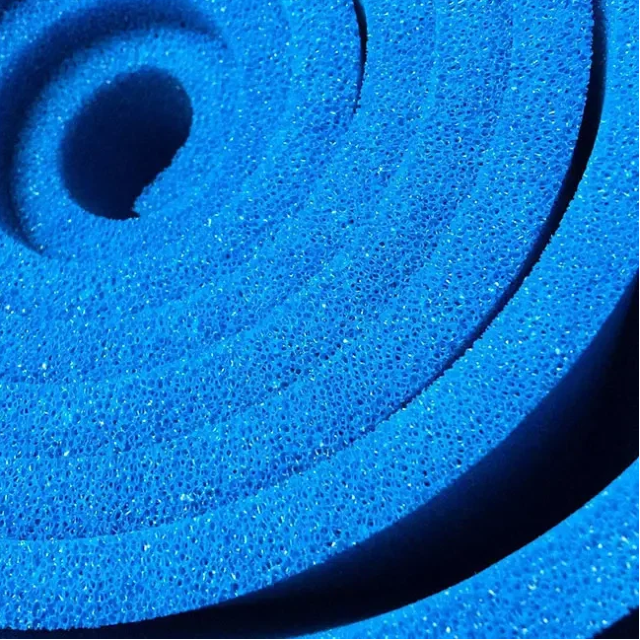
Silicone sponge is widely used in vacuum ironing tables and steam presses, where both heat and airflow must be carefully managed. In these systems, the padding layer contributes to both steam distribution and surface stability.
Because vacuum tables rely on airflow to remove moisture, the permeability of the padding becomes especially important. Silicone sponge supports this process by allowing air and steam to move efficiently through the system.
In many professional ironing setups, the padding system consists of multiple layers, each serving a specific purpose. Silicone sponge is often used as a core layer within this structure.
It works together with covers and other materials to create a balanced system that supports both performance and durability. Understanding this layered approach helps buyers see why choosing the right material is essential for achieving the desired results.
When selecting silicone sponge for an ironing table, buyers often focus on factors such as thickness and softness. These characteristics influence how the material interacts with pressure and how it supports the garment during pressing.
However, these parameters should always be considered in relation to the actual operating conditions. Factors such as steam usage, pressure level, and machine type all play a role in determining the most suitable specification.
In industrial applications, standard sizes are not always sufficient. Many ironing tables require customized dimensions to ensure proper fit and performance.
At iFeltek, we understand that each production line has its own requirements. Providing tailored solutions helps ensure that the silicone sponge integrates seamlessly into the system, reducing installation issues and improving long-term reliability.
In garment production, consistency is key. Variations in finishing quality can lead to additional labor, delays, and increased costs.
By providing a stable and reliable support layer, silicone sponge helps reduce these variations. This leads to fewer reworks and a smoother production process overall.
Although silicone sponge may seem like a minor component, its impact on daily operations can be significant. From improving steam distribution to maintaining surface consistency, it contributes to a more efficient and predictable ironing process.
Choosing the right material is not just about replacing a part—it is about enhancing the overall performance of the finishing line.
Function | What Happens During Pressing | Why It Matters for Garment Quality | What Buyers Should Check |
Cushioning support | Provides a stable surface under pressure | Prevents uneven pressing and marks | Thickness and density |
Heat resistance | Maintains structure under high temperature | Ensures consistent performance over time | Temperature tolerance |
Steam permeability | Allows steam to pass through evenly | Reduces wet spots and improves finish | Porosity level |
Resilience | Recovers after compression cycles | Maintains surface uniformity | Elastic recovery ability |
Durability | Resists wear in continuous use | Reduces replacement frequency | Material quality |
Silicone sponge is not just a simple padding layer—it is a key performance component that directly influences how heat, pressure, and steam work together in garment finishing. When chosen correctly, it improves consistency, supports steam flow, and maintains structural stability cycle after cycle. For production lines where finishing quality matters, the padding beneath the cover is not a secondary detail—it is a critical part of the system.
At iFeltek, we focus on delivering silicone sponge materials that match the real demands of ironing tables and finishing lines. Our solutions are designed to help customers achieve better outcomes with reliable, long-lasting performance.
Looking to improve your ironing process with high-performance silicone foam? Contact us today to learn more about customized options and technical support for your application.
1. Why is Silicone Sponge better than standard ironing padding?
Silicone Sponge offers better heat resistance, resilience, and steam permeability, which helps improve finishing consistency and reduce maintenance issues.
2. Can Silicone Sponge improve steam penetration on ironing tables?
Yes, its porous structure allows steam to pass through more efficiently, resulting in more even pressing and fewer moisture-related problems.
3. How long does Silicone Sponge last in industrial ironing use?
Its lifespan depends on operating conditions, but it generally lasts longer than standard padding due to its resistance to heat and compression.
4. Is Silicone Sponge suitable for all types of garments?
It works well for a wide range of fabrics, including delicate materials, because it provides stable support and controlled steam distribution.
