


Views: 0 Author: Site Editor Publish Time: 2026-04-01 Origin: Site


When ironing quality starts to fluctuate, most operators instinctively check steam pressure, roller temperature, or machine settings. These are obvious factors, but they are not always the root cause. In many cases, the real issue lies in how textiles move through the system. The performance of the Conveyor Belt determines whether fabrics pass smoothly, dry evenly, and exit the ironing zone in the right condition. At iFeltek, we focus on application-driven solutions because we understand that ironing quality is not only about heat—it is also about controlled movement and reliable material performance.
Ironing is often described as a thermal process, but in reality, it is a combination of heat and motion. Garments and flatwork items must move continuously through the machine while being exposed to controlled heat and pressure. If the movement is unstable, even perfectly adjusted temperature settings cannot guarantee consistent results.
A conveyor belt acts as the moving surface that supports this process. It determines how smoothly fabrics are transported, how evenly they remain positioned, and how consistently they are exposed to heat. If the belt speed fluctuates or if tracking is uneven, fabrics may shift or wrinkle during processing.
This is why stable conveying is essential. A high-quality belt ensures that textiles move in a controlled and predictable manner, allowing the ironing process to produce uniform results.
Another important factor is the contact time between the fabric and the heated surface. This contact time is directly influenced by the speed and stability of the conveyor system.
If the belt moves too quickly or unevenly, some areas of the fabric may not receive sufficient heat. If it moves too slowly or inconsistently, over-processing can occur, leading to excessive dryness or fabric stress.
Consistent belt performance helps maintain the correct balance. It ensures that each part of the fabric receives the same exposure, resulting in a more even finish.
Wrinkles and distortion are common quality issues in ironing processes. While they are often attributed to improper handling or incorrect machine settings, they can also result from unstable conveying.
When a conveyor belt provides a smooth and stable surface, fabrics remain properly aligned as they move through the system. This reduces the risk of shifting, folding, or stretching during processing.
As a result, the final appearance of the garment improves. The surface becomes smoother, and the overall finish looks more consistent.
In ironing systems that use steam, moisture management is a key factor. If moisture is not removed efficiently, garments may leave the machine slightly damp, which affects both quality and productivity.
The structure of the conveyor belt plays an important role in this process. A belt with good air permeability allows moisture and steam to pass through more effectively. This supports faster drying and helps maintain a cleaner finish.
Improved airflow also contributes to better temperature control, as excess heat and moisture are dissipated more efficiently.
When a conveyor belt is not performing properly, the effects are often visible in the finished product. Common signs include uneven surfaces, visible marks, or slight distortions in the fabric.
Slipping is another issue that can occur when the belt loses its grip or stability. This can cause fabrics to move unpredictably, leading to inconsistent processing.
These symptoms are often mistaken for problems with the machine or operator technique. However, they may actually indicate that the belt is no longer providing the necessary support.
Another indicator of belt-related issues is an increase in rework. When garments require additional pressing or adjustments after initial processing, it suggests that the system is not delivering consistent results.
Repeated touch-up work not only increases labor costs but also reduces overall efficiency. Identifying the root cause of these issues can help improve both quality and productivity.
In many cases, upgrading the conveyor belt can significantly reduce the need for rework and stabilize the finishing process.
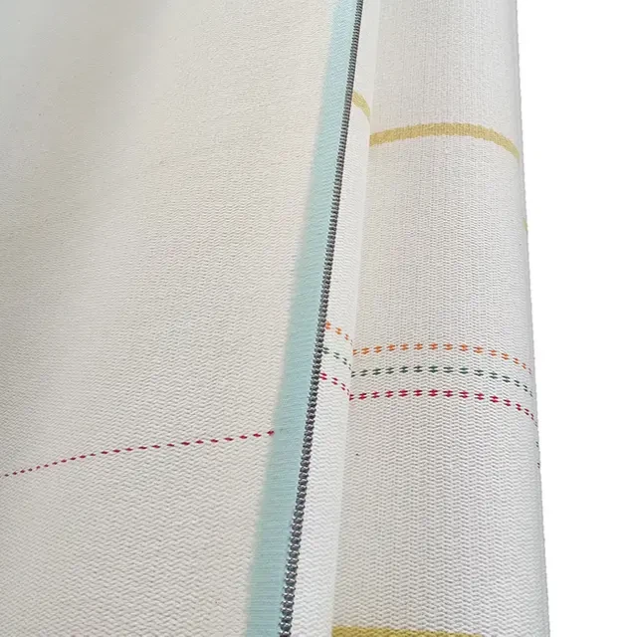
Ironing belts must operate under challenging conditions, including high temperatures, continuous friction, and mechanical stress. These factors make durability a key consideration.
Heat resistance ensures that the belt maintains its structure under prolonged exposure to elevated temperatures. Abrasion resistance helps prevent wear caused by constant contact with fabrics and machine components. Breaking strength determines the belt’s ability to withstand tension without failure.
Together, these properties contribute to reliable performance and longer service life.
In addition to mechanical strength, the surface characteristics of the belt are equally important. The texture of the belt affects how fabrics interact with it during transport.
A smooth yet stable surface helps prevent damage and ensures consistent movement. Breathability supports airflow and moisture removal, while dimensional stability ensures that the belt maintains its shape over time.
These factors may seem subtle, but they have a direct impact on ironing quality.
In commercial laundry operations, large volumes of textiles are processed continuously. In such environments, even small inefficiencies can have significant consequences.
A high-quality conveyor belt helps maintain consistent performance across long production runs. It reduces variability and supports stable operation, which is essential for meeting production targets.
In garment manufacturing and textile finishing, quality standards are often higher. Products must meet specific appearance and performance criteria, which makes consistency even more important.
Using the right belt helps ensure that each item is processed under the same conditions. This contributes to better quality control and reduces the risk of defects.
Many buyers evaluate conveyor belts based on whether they function without failure. However, this approach overlooks the impact of belt performance on final product quality.
A belt that simply “runs” may still cause subtle issues that affect efficiency and appearance. Evaluating the belt based on output quality provides a more accurate measure of its value.
Understanding the specific requirements of ironing and laundry applications is essential when selecting a conveyor belt. Generic solutions may not address the unique challenges of these environments.
At iFeltek, we focus on application-specific design. By aligning belt properties with real operating conditions, we help customers achieve better performance and more reliable results.
Belt Property | Quality Impact | Typical Problem When Inadequate | Operational Benefit When Correct |
Transport stability | Ensures smooth fabric movement | Wrinkles, misalignment | Consistent finishing |
Heat resistance | Maintains structural integrity | Deformation, uneven results | Stable operation |
Air permeability | Supports moisture removal | Damp garments | Faster drying |
Surface consistency | Protects fabric integrity | Marks or distortions | Improved appearance |
Durability | Reduces wear and downtime | Frequent replacements | Lower maintenance cost |
A conveyor belt affects ironing quality because it controls how fabrics move, how evenly they are processed, and how efficiently moisture is removed. It is not just a transport component, but a critical part of the finishing system that influences both quality and productivity. At iFeltek, we develop solutions tailored to ironing and laundry applications, helping customers achieve stable performance and better results with reliable materials. If you are looking to improve your finishing line with a more effective woven belt system, contact us to learn more about our solutions.
1. How does a conveyor belt affect ironing quality?
It controls fabric movement, airflow, and stability, all of which influence how evenly garments are pressed and finished.
2. What are common signs of conveyor belt problems?
Uneven finishes, wrinkles, slipping, and increased rework are typical indicators.
3. Can upgrading the conveyor belt improve efficiency?
Yes, a better-performing belt can reduce downtime, improve consistency, and increase overall productivity.
4. What should be considered when choosing a conveyor belt for ironing?
Key factors include heat resistance, durability, airflow, and compatibility with the specific ironing system.
